
Ideas Have Consequences
by Richard M. Weaver | 
Second Treatise of Government
by John Locke | 
Karl Marx
by Allen Wood | 
Means Without End
by Giorgio Agamben | 
Two Faces of Liberalism
by John Gray | 
Political Order in Changing Societies
by Samuel P. Huntington | 
Why Not Socialism?
by G. A. Cohen | 
The Case For Democracy
by Natan Sharansky | 
The Idea of Justice
by Amartya Sen | 
The Fountainhead
by Ayn Rand | 
The Virtue of Selfishness
by Ayn Rand | 
Justice
by Michael J. Sandel | 
Propaganda
by Jacques Ellul |
Contingency, Irony, and Solidarity
by Richard Rorty | 
Nietzsche and Philosophy
by Gilles Deleuze | 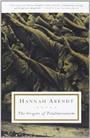
The Origins of Totalitarianism
by Hannah Arendt | 
The Art of the Impossible
by Vaclav Havel |
The Revolution of Everyday Life
by Raoul Vaneigem | 
State of Exception
by Giorgio Agamben | 
One-Dimensional Man
by Herbert Marcuse |
 In this trenchant challenge to social engineering, Paul Gottfried analyzes a patricide: the slaying of nineteenth-century liberalism by the managerial state. Many people, of course, realize that liberalism no longer connotes distributed powers and bourgeois moral standards, the need to protect civil society from an encroaching state, or the virtues of vigorous self-government. Many also know that today's "liberals" have far different goals from those of their predecessors, aiming as they do largely to combat prejudice, to provide social services and welfare benefits, and to defend expressive and "lifestyle" freedoms. Paul Gottfried does more than analyze these historical facts, however. He builds on them to show why it matters that the managerial state has replaced traditional liberalism: the new regimes of social engineers, he maintains, are elitists, and their rule is consensual only in the sense that it is unopposed by any widespread organized opposition.